 Skip to main content
The product label is often a consumer’s first interaction with your brand.
While engaging design and scientifically substantiated claims are important, your food and beverage label must also comply with Canadian regulatory standards.
Our team can review all aspects of your food label, including:
- Ingredient lists
- Allergen labelling
- Nutrition Facts table compliance
- Formatting and layout
- Standard of identity and food product classification
- Country of origin statements
- Date markings
- Food-specific labelling requirements
- Bilingual labelling requirements
-
Requirements for allergen claims, composition and quality claims, health claims, method of production claims, organic claims, origin claims, nutrient content claims, and structure/function claims
Our Canadian regulatory experts can also provide French translation support for label content, along with guidance on the considerations that apply to your specific product and market.
In Canada, food products are regulated under the Food and Drug Regulations (FDR) and, where applicable, the Safe Food for Canadians Regulations (SFCR). Depending on their composition, ingredients, and intended use, products in food format typically fall into one of two categories in the Canadian market: conventional foods or supplemented foods.
Identifying the appropriate category early can help inform decisions around formulation, ingredients, claims, and the information that must appear on the label.
Conventional Foods
Conventional foods are everyday products intended for general consumption without added vitamins, minerals, or other supplemental ingredients beyond permitted fortification, such as vitamin D in milk. They are primarily regulated under the FDR and are subject to requirements governing ingredients, composition, fortification, claims, and labelling.
These products are generally intended to satisfy basic requirements of hunger, thirst, and nutrition. Unlike some other regulated product categories, there is no single, comprehensive list of all ingredients permitted for use in conventional foods. Instead, individual ingredients may be subject to specific conditions, restrictions, or other regulatory considerations.
When introducing an ingredient that does not have an established history of use in the food supply, a Novelty Determination Information Form (NDIF) may be required to establish how the ingredient should be regulated and whether additional pre-market review is necessary.
Labelling requirements can also vary according to the nature and composition of the food. As of January 1, 2026, applicable prepackaged foods must comply with front-of-package (FOP) nutrition labelling requirements when they meet or exceed established thresholds for saturated fat, sugars, or sodium.
Supplemented Foods
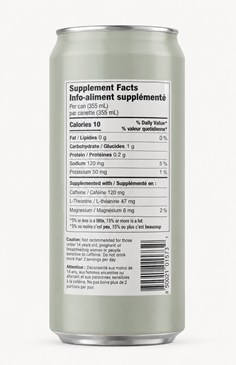
Supplemented foods are prepackaged foods with one or more specific ingredients added for purposes other than nutrition, i.e. vitamins, minerals, amino acids, caffeine, or other permitted substances. The supplemented foods framework was introduced in 2022 and is established under the FDR.
Not every food can be marketed as a supplemented food. Specific food categories are eligible, and each supplemental ingredient must appear on Health Canada’s List of Permitted Supplemental Ingredients and satisfy its applicable conditions of use. These conditions can include the food category in which the ingredient may be used, maximum permitted amounts, and required cautionary statements.
The framework also introduces additional labelling elements that distinguish supplemented foods from conventional foods. All supplemented foods are required to carry a Supplemented Food Facts table (SFFt), which provides information about supplemental ingredients alongside core nutrient information.
Depending on the type and amount of supplemental ingredients present, the product may also require specific cautionary statements and a Supplemented Food Caution Identifier (SFCI) on the front of the package. Ensuring the formulation and label work together is therefore an important part of preparing a supplemented food for the Canadian market.
Reach out to our team today to get a quote for support with Canadian food compliance and labelling.